
Friday, April 8, 2011
A new way to share local product availability with your customers
0 comments Posted by Find Insurance Online at 1:20 AM[Cross-posted from the Google Merchant Blog]
When you provide Google with local product availability data, your Google Place Page will now automatically include a new section, ‘Popular products available at this store’, featuring five popular products along with price and local availability. For shoppers unfamiliar with your business, this section shows the types of products available in your store.
If shoppers are looking for a specific item, they can click ‘Search within this store’ to search your product inventory to see if a particular item is in stock nearby.

To automatically display local product availability on your Google Place page, you’ll need to first share local availability data with Google through a Merchant Center account and claim your a Google Place page. For instructions on sharing local product availability with Google, read this Help Center article. Learn how to claim your Google Place page here.
Thursday, April 7, 2011
Google and Ink from Chase launch 5-city seminar series for SMBs
0 comments Posted by Find Insurance Online at 11:27 PMEvery day we hear from business owners who think they need special skills to reach new customers online. Often they’re just overwhelmed by the seeming complexity of online marketing options. So they sit on the sidelines, eager to get in the game, but confused about where to start.
Sound familiar?
Google and Ink from Chase have teamed up this year to help small business owners get off the sidelines and into the game! As part of this commitment to helping small business owners, we jointly hosted the first Google-Ink from Chase ‘Grow Your Business Online’ event on March 15, 2011 at the JP Morgan Headquarters in New York City.
Over 200 Ink small business customers attended the program, living proof of how an incredibly diverse array of small business touch our lives every day - from chocolate shops to online gaming and private medical practices. The evening featured welcome comments from Richard Quigley, President of Ink from Chase, expert advice from AdWords evangelist Frederick Vallaeys on four ways for SMBs to market their business online and also included the Nuyorican Poets Cafe’s executive director, Daniel Gallant, talking about how online advertising helped their business grow.
One small business owner remarked that the tools and tips from Google experts on how to market small businesses online gave her “a new perspective of how to reach out to customers.” Another attendee found the Google Places page so compelling he went back to his business afterwards and “immediately verified my business’ Google Places page.”
Thursday, March 31, 2011
Two Cities, One Week: Charlotte, North Carolina
0 comments Posted by Find Insurance Online at 3:05 AM[Cross-posted from the Hotpot Community Blog]
More than 20 percent of all searches on Google each day have a local intent, and we want to make it as easy as possible for Charlotte businesses to get discovered whether folks are looking for BBQ, furniture stores or electricians. We’ve already begun sending the Places starter kits directly to local businesses. In addition to instructions on how to make the most of Google’s free online tools, it also features some ideas on how to get your customers to share their great experiences by rating and reviewing your business on Google. If you don’t receive a kit within the next few days, any Charlotte area business can also request one for free through the Google Places Catalog.
And, for businesses that are already “Recommended on Google,” we’re also including our NFC-enabled window decals that allow anyone with an NFC-enabled device, such as the Nexus S, to tap their phone against the decal and see all the relevant information about that business.
We’re excited to be in kicking things off in Charlotte and look forward to working with its great business community over the next several months.
Posted by Sameer Mahmood, Local Marketing Team
Wednesday, March 30, 2011
[Cross-posted from the Hotpot Community Blog]
With its large student population, growing tech community — including the Google office that opened in 2007 — and rich heritage surrounding small businesses, the capital of Wisconsin is an exciting addition. We’re really looking forward to working with the more than 15,000 local businesses in the area, helping them to get noticed on Google using our free suite of tools as part of Google Places.
In addition to having a dedicated team that will work with local businesses throughout Dane County, we’ve also begun mailing Google Places starter kits to thousands of local businesses in the area. These kits include instructions on how any business can claim their free Place page, as well as some samples of materials to help business owners encourage their customers to rate and review them on Google.
For those businesses who are already “Recommended on Google,” we’ll also be distributing our NFC-enabled window decals. These allow users with NFC-enabled devices, such as the Nexus S, to tap their phone against the decal and see all the information about that business.
As part of this launch, we’ve also partnered with the Greater Madison Chamber of Commerce to offer a series of workshops beginning in early April that are open to all chamber members and will focus on step-by-step instructions and counseling on how Dane County businesses can make sure they are effectively managing their presence online. If you’re interested in attending, please contact your Chamber of Commerce representative.
Posted by Jeff Aguero, Local Marketing Team
Thursday, February 3, 2011
Google Hotpot now on Google.com and around the world
0 comments Posted by Find Insurance Online at 2:45 AMBack in November, we introduced Hotpot, a new local recommendation engine powered by you and your friends. Using Hotpot is simple: you rate places on google.com/hotpot—restaurants, hotels, cafes—and add friends on Hotpot whose opinions you trust. Then the next time you perform a search, Google will serve up personalized results, listing places based on your tastes, as well as recommendations from your friends.
We’ve watched Hotpot grow and change over the last couple months, and today Hotpot is really going places: to a Google search box near you and around the world.
You can now enjoy Hotpot recommendations in your regular search results on Google.com. So say you’re looking for a restaurant in Barcelona. Go to Google and search [restaurant barcelona]. If a friend has rated a particular restaurant, you might see their rating and what they had to say about it—as well as their name and photo—directly beneath that restaurant’s listing. To see all recommendations by your friends, click “Places” on the lefthand side of the page, and choose “Friends only.” Remember, you’ll need to be logged in to your Google account in order to see recommendations.

Seeing place recommendations based on your tastes and those of your friends across more Google searches will make results more relevant to you and maybe lead you to discover a new gem. If you don’t have Hotpot friends yet, you can invite them to share all the places they love with you by using the “Friends” tab on google.com/hotpot.
But Hotpot will only be half the fun if you can’t share it with all your international friends. So starting today, we’re making Hotpot available in 38 new languages—including Chinese, French, German, Italian, Korean, Polish, Russian and Spanish—allowing people to share their favorite places in their native language.
Start rating and sharing recommendations with Hotpot everywhere, anytime: at google.com/hotpot, on Google Maps, using Google Maps for Android with an easy widget, and on our new iPhone app.
Happy rating!
Thursday, January 27, 2011
Tips for creating a free business listing in Google Places: Adding useful descriptions and relevant categories
0 comments Posted by Find Insurance Online at 5:02 AM
You will be asked to choose at least one category from our standard list - just start typing in the categories field to see what is available via the auto-suggestions.

We recommend always choosing the best matching and most specific category for your business - for any specific category, Google will be able to automatically determine the more generic category as well. That means, if you are a Mexican restaurant, you should go for ‘Mexican Restaurant’ and not ‘Restaurant’ - Google then automatically knows that if you are a Mexican restaurant, you are also a restaurant.

Wednesday, January 26, 2011

Wednesday, December 22, 2010
Enhance your productivity with more applications for Google Apps
0 comments Posted by Find Insurance Online at 12:30 AM
Last month we launched an improvement that makes more than 60 additional Google services available to Google Apps users. Since the launch, we’ve featured posts from product teams across Google to showcase how you can benefit from the new services.
Our colleagues working on Google Reader, Google Alerts, Google News, and Google Finance described how their products give you new ways to discover content on the web. The Blogger and YouTube teams shared how their services can be used to connect with your customers and communicate information about your products and brand. We also featured posts from the Google Analytics, Google Website Optimizer, Google Custom Search, and Google Translator Toolkit teams to highligh tools that help your company build and optimize your web property. Posts from Google AdWords and Google Places showed how you can make it easier for potential customers to discover your business when they are searching online, and a post from Google Checkout described how you can let visitors purchase products from your site once they arrive. And if your business isn’t built around an online transaction model, the Google AdSense and DoubleClick for Publishers teams outlined tools that you can use to efficiently monetize traffic to your website. We also featured posts on Picasa Web Albums and Google SketchUp & 3D Warehouse that highlighted use cases for sharing and editing photos and 3D images at your organization. Finally, posts from Google Voice and Google Chrome Sync featured products that leverage the power of the web to allow you to work seamlessly across multiple devices, so you’re not tied to your desk phone or desktop PC to be productive.
This series has highlighted a few ways that you can use these additional Google applications, and we’re confident that you will discover many new and interesting use cases that fit your business. You can explore even more exciting Google services now available with your Google Apps account at http://www.google.com/apps/more.
All of these new services can be enabled by your domain administrator from the Google Apps Control Panel at https://www.google.com/a/[your_domain.com] (replace [your_domain.com] with your actual domain name). Your domain administrator can grant different groups of users access to different sets of applications, so your company can get up and running today with more than 60 productivity-boosting applications matched to those users that will benefit from them most.
Note: Some products may not be available in all areas.
Tuesday, December 21, 2010
Tips for creating a free business listing in Google Places: business types
0 comments Posted by Find Insurance Online at 11:35 PM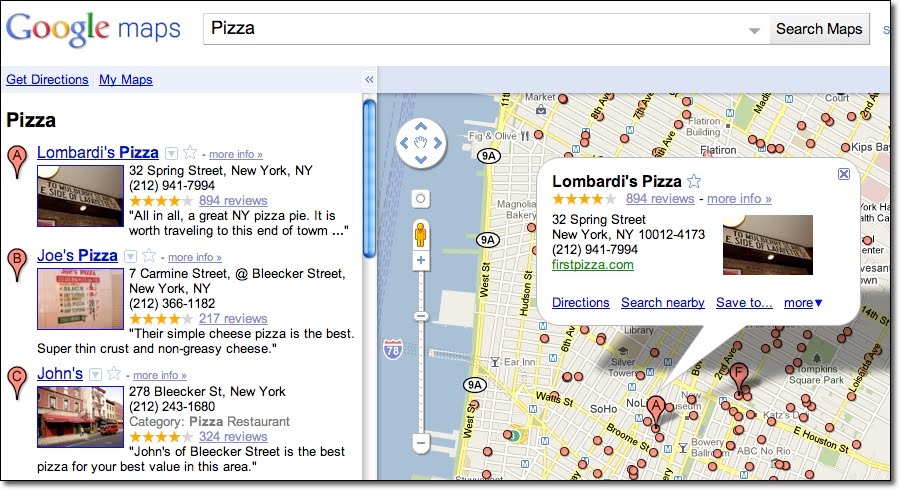


Friday, December 10, 2010


Thursday, December 9, 2010
[Cross-posted from the Hotpot Community blog]
Lots of things can change about a business — it can close, move, or change operating hours. As you rate places on Hotpot, you may notice that the business information on Google Places isn’t always completely accurate. You may even find duplicate listings for the same business.
Many of you have asked how you can help us keep the information about a place up to date. As a local expert, you can tell us about outdated information, or even change it yourself on the Place page.
Edit details on an unverified listing
There are two ways to fix business information on Google Maps. For unverified listings, you can click the Edit Details or Edit this place links on the Place page to correct the address, homepage, location, phone number, or business categories of the place. Once you’ve made an edit, we’ll verify that it’s correct and make the change on Google Maps.

Report a problem on a verified listing

Add a place
Finally, you can also use the Report a Problem link below Maps search results to add a new place. If you search for the business on Google Maps and can’t find it, click Report a Problem at the bottom of the search results. From there, choose A place is missing from Google Maps and follow the steps to add a new place to Maps. Once the place is added, you can easily rate it on the Place page.

The place editing features are not currently available in all countries. Don’t worry, we’re working hard to make this available in more places. In the meantime, if you don’t see the Report a Problem tool in your Google Maps viewport, we encourage you to get in touch
Thanks for helping to keep local information on Google Maps correct and up-to-date!
Posted by Cecelia Stewart, Strategist Google Places and Hotpot
Tuesday, December 7, 2010

Editor’s note: We recently launched an improvement that makes over 60 additional Google services available to Google Apps users. This series showcases what’s new and how your organization can benefit.
Welcome to Google Places
You already know that Google Apps is a great way to run your business and ensure that your employees can collaborate and work effectively. But are you also taking advantage of Google’s other online tools that can help your company build a strong external presence and customer base? Our recent infrastructure upgrade has made doing so much easier: now you can access Google Places with your existing Google Apps account.
Google Places offers business owners a free and easy way to make sure that potential customers can find their business when searching online at Google.com and in Google Maps, both from desktops and mobile devices. With your free Google Places account, you can:
- Be found: Verify your business’s information to make sure people can find you on Google.
- Stand out: Engage customers with photos, coupons, custom posts, and more on your Place page.
- Get insight: Use feedback about your listing to make smarter business decisions.

Claiming your business listing with Google Places is easy and verification methods are in place to make sure data is accurate. Once you’ve claimed your listing, you can update it through Google Places at any time using your Google Apps account by signing in at google.com/places. In addition to creating your listing, you can also enhance it by highlighting special offers with coupons, sharing photos and videos of your location or products, marking your service areas, and responding to reviews from customers.
Once your business listing is up and running, you can use the Places dashboard to gain valuable insights about your listing’s performance. For example, you can view top search terms for your business, which can help you set up a more targeted AdWords campaign. Or, you can view an interactive map showing the origin of customers who request driving directions to your current location, which could help you decide where to open up a new location.
Learn more and get started
Google Places can be enabled by your domain administrator from the Google Apps Control Panel at https://www.google.com/a/[your_domain.com] (replace [your_domain.com] with your actual domain name). If your organization isn’t using Google Apps yet, you can learn more and sign up today at http://www.google.com/apps/more.
Share your story
Have you already started using Google Places at your organization, or plan to now that it’s available? Please share your story and your organization could be featured in the next Gone Google ad campaign!
Note: Google Places may not be available in all areas
Wednesday, November 17, 2010
Google Boost: Now available in additional U.S. cities
0 comments Posted by Find Insurance Online at 1:35 AM
We recently announced that our new search advertising program, Google Boost, is available to local businesses in San Francisco, Houston and Chicago. Based on the great feedback and results from early participants, the beta is expanding to additional U.S. cities. Starting today, select local business owners can sign in to their Google Places account and try Boost if they’re located in San Jose, Seattle, Wichita, Charlottesville (VA), Atlanta, Chapel Hill, Orlando, Washington D.C., Boston, Cross Plains (TX) and Portland (ME). We’ve also made Boost available for all local businesses in Illinois.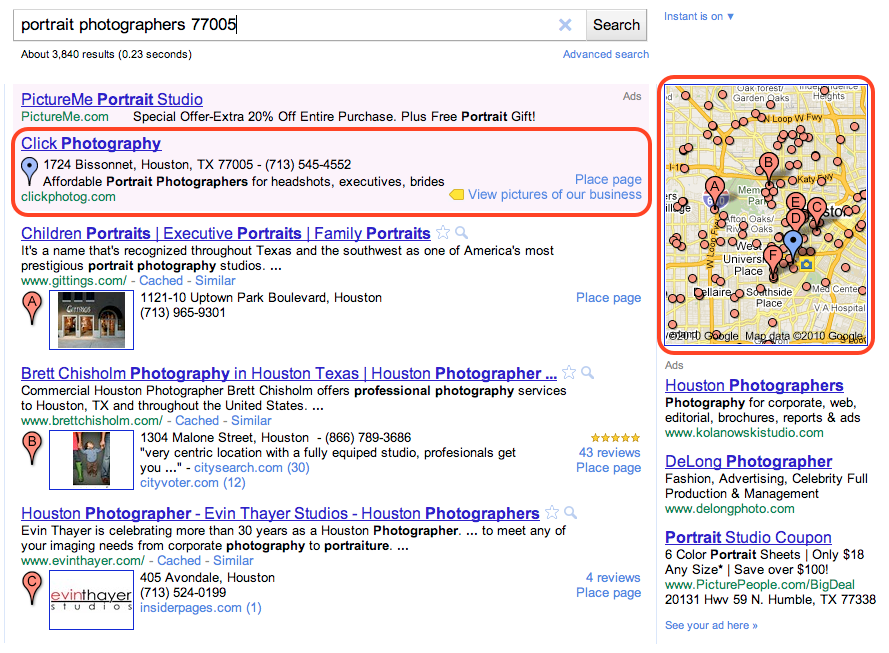 A Boost ad for Houston-based Click Photography, and it’s corresponding blue map pin
For those of you who are not yet familiar with Boost, it’s a quick and easy way for local businesses to market themselves and connect with potential customers in their area. Based on the information you’ve already provided on the Place page for your business, we provide a suggested ad description, a web or Place page, your business categories and a monthly budget. Once you’ve confirmed these four simple elements, our system automatically creates an ad campaign. Your ad may start appearing almost immediately when people in your area search online for products and services related to your offering. And what’s more, you’ll only pay when a potential customer actually clicks on your ad. To be clear, the ranking of Boost ads in the “Ads” section of the Google.com and Google Maps search results pages are based on relevance and quality factors; and Boost ads do not impact the ranking of your free, organic business listings.
Over the next week, eligible businesses in the cities mentioned above will see an invitation to try Boost when they sign in to their Google Places account dashboard. Business owners located outside of these areas can fill out this form to be notified when Boost expands further to their regions.
Posted by Kiley McEvoy, Product Manager
Tuesday, November 16, 2010
Google Tags Feature Paints Rosy Picture for Art Gallery
0 comments Posted by Find Insurance Online at 1:50 AMNew York City’s Spanierman Gallery encounters challenges typical of businesses that rely on foot traffic and long-term relationships with clients.
For more than half a century, Spanierman Gallery has dealt in some of the finest works of American art, including works by Georgia O’Keeffe, Winslow Homer and James A.M. Whistler. But because of the abundance of nearby galleries, connecting with a small, discriminating clientele requires continual effort. A strong online presence that helps drive foot traffic to the gallery is essential in today’s art market.
Challenge
Spanierman embraced the Internet early, launching a website in the mid-1990s. For several years, this helped give the gallery an edge, enabling potential clients to easily find it when they searched for artists who had works on display there. That changed as more competitors ventured online.
“As more people embrace the web, we’ve had to step up our game,” says Marketing Director David Spanierman.
For a business that relies on patrons with discretionary income, the sluggish economy has only heightened the need for more visibility. Spanierman knew he needed to do more.
Action
After using Google Places to manage his free business listing on Google.com and Google Maps for two years, Spanierman decided to try Google Tags in July 2010. Adding a distinct yellow marker to his business listing, which calls attention to his gallery amongst a list of similar businesses, made immediate sense. He uses the photo tag to emphasize to potential customers that they can view artwork from the current exhibitions.
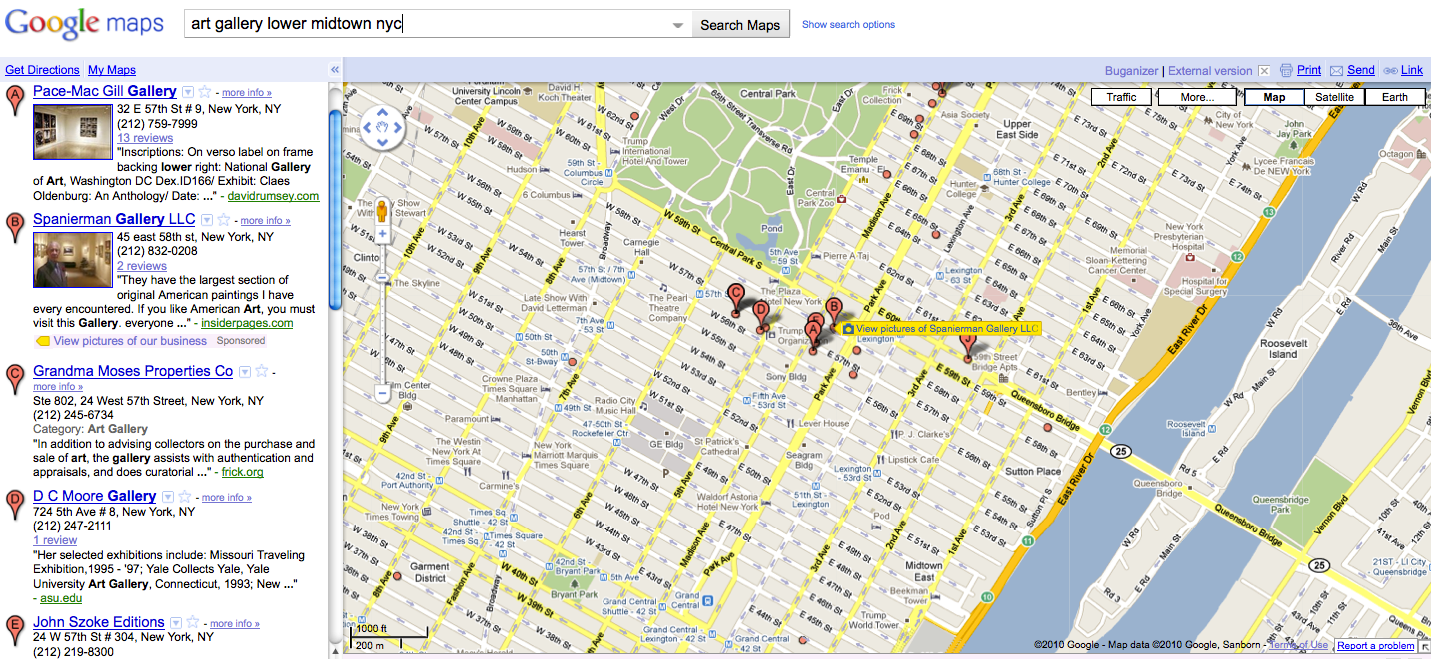 Spanierman Gallery’s business listings with a photo tag on Google Maps
 “Our goal has always been to help users find what they want,” he says. “The Google Tag helps get our information out to potential customers.”
Results
Since the gallery began using Google Tags, interactions with its business listing have increased nearly 10 percent.
“When you compare the $25 per month for a tag with the amount of money you could spend on other forms of marketing, I think it’s very reasonable,” Spanierman says. “Having that additional avenue enhances the chances that Internet searchers will come and visit you.”
Spanierman sees Google Tags as a wise addition to his marketing mix not only because of its affordability, but also because it enables him to quickly and easily edit his tag to match the gallery’s changing exhibitions.
“When it comes to performance, price and flexibility, Google Tags is the winner,” he says.
Make your listing stand out with Google Tags, try it out now www.google.com/help/tags.
Posted by Bernadette Cay, Associate Product Marketing Manager
Tuesday, November 2, 2010
SMB Week Canada Wrap-Up: What’s a Small Business to Do?
0 comments Posted by Find Insurance Online at 11:58 PMChris O’Neill, Managing Director for Google Canada, recently spoke at the 10th annual Small Business Forum organized by Enterprise Toronto. In his address, he highlighted a few essential steps all small businesses and entrepreneurs should be pursuing to grow their business and reach new customers.
So before you get caught up in the hustle and bustle of the holidays, take the opportunity to make sure you’re using every online tool available to you that can help you make the most of this shopping season. There’s no time like the present to engage in these five things:
- Establish an Online Presence: 20 percent of searches on Google are related to location, so it’s important for local businesses to have a presences on the web. A website does not need to be complex to serve its purpose. Creating a user-friendly, well-structured website will also help search engines like Google find and index it easily. Google Webmaster Tools provides a free and easy way to make your website more Google-friendly.
- Use Free Marketing to Reach Customers: People search Google.com and Google Maps to find local business, so make sure your customers know where you are and what you’re all about by claiming your free Google Places business listing. In addition to sharing your location, phone number and business hours, use Google Places to engage with customers by providing photos, video, coupons, public responses and more. You can also take advantage of free marketing opportunities by posting content to social networking sites, such as YouTube.
- Know Your Customers: To understand why some visitors aren’t converting, get website analytics data and learn what potential customers are doing on your site. Google Analytics is one of these analytics products, and it’s a free and powerful tool that can help you answer questions about the effectiveness of your content, how engaged your users are with your site, where they abandon your shopping cart and much more. With the right data in your hands, you can make smarter website design decisions and also make sure that the money you spend on advertising is actually delivering the results you want.
- Advertise Online: Online advertising is targeted, measurable and flexible. Products such as Google AdWords allow business owners like you to connect with your target audience at the exact moment they search for your products or services online. With AdWords, you only pay when someone clicks on your ad is taken directly to your website. You also get actionable analysis and performance information, so you know how to refine your ad copy or the keywords that trigger your ad to appear on the search results page. Plus, any business can be up and running in 15 minutes.
- To find out about all our advertising tools and products, visit our Google for Advertisers site for Canadian businesses.
- Embrace the Cloud: Web-based applications, such as Google Apps, are helping to streamline productivity and ensure that your business is running efficiently. Your employees can collaborate on documents in real-time and access them from anywhere, whether they’re on the road or at the office. This suite of online products also helps businesses spend less time and money managing email and other IT services, giving them the ability to focus more on what they do best: creating quality products and services, and sharing them with customers. Best of all, you can get started with Google Apps for free!
Google Places now more widely available in Asia
0 comments Posted by Find Insurance Online at 2:15 AM
People often use the Internet to look for businesses in their nearby vicinity. For example, a mother in Karachi might be trying to find a dentist for her teenager, or a young professional in Colombo may find himself in need of a computer repair shop. People also go online to research places they might visit when traveling, such as a dive shop in Palau, a backpacker hostel in Kathmandu, or a cooking class in Phnom Penh.
Because of this increasing trend in which people search online to find local establishments, business owners all over the world are realizing how simple and easy it is to reach their target customers through free business listings on Google.com and Google Maps. We’ve been gradually expanding access to our online database of local information, called Google Places, and it has recently become available to businesses and locations in 30 additional countries in Asia.
 Example of business listings displayed on google.com
- Be found: Verify your information to make sure people can find you on Google
- Stand out: Engage customers with photos, coupons, custom posts on your Place page and more
- Get insights: Use info about your listing to make smarter business decisions
Posted by Andrew McGlinchey, Product Manager
Monday, October 25, 2010
Advertise your local business with Google Boost
0 comments Posted by Find Insurance Online at 11:30 PM
As a local business owner in today’s day and age, you know that it’s important to have an online presence because that’s where your customers are. In fact, research shows that 97% of people conduct research online before buying locally. Hopefully you’ve gone to Google Places to claim your free business listing that appears on Google and Google Maps. That enables you to share accurate information about your business such as your hours of operation, photos and videos - and now you can do even more.
Today, we’re announcing the availability of a new online advertising solution to help local businesses connect with potential customers in their area. Boost enables business owners to easily create online search ads from directly within their Google Places account. No ongoing management is needed after the initial set up, and this beta is currently available to select local businesses in San Francisco, Houston and Chicago.
Boost ads are eligible to appear in the “Sponsored Links” section of Google.com and Google Maps search result pages. For example, if you’re a restaurant owner in San Francisco who has signed up for Boost, your ad may show up when someone does a related search like the one below, indicating a cuisine and location that matches yours. Beyond the basics like your company name, address, phone number and website, your ad may also include the number of reviews you’ve received, an average star rating and a link to your Place page to help potential customers find additional useful information about your business. When a map appears alongside the results, a blue pin will help folks quickly find your location on the map. Businesses using Google Tags will also see their yellow tag appear in the ad.
To create your ad, all that is required is a short business description, a web or Place page, your business categories and a monthly budget. From there, our system automatically sets up your ad campaign - figuring out the relevant keywords that will trigger your ad to appear on Google and Google Maps, and how to get the most out of the budget you allotted. You’ll only pay when a potential customer actually clicks on your ad, and you can also view basic ad performance data from your Google Places dashboard.
Here is an example of the simple sign up page within Google Places, which takes just a few minutes to complete. To make the process even easier, the “description” and “categories” fields may be pre-populated with suggestions based on the information you provided on the Place page for your business.
We hope Boost provides busy local business owners with a quick and easy way to share information about themselves with the people who look for them online. Placement in the “Sponsored Links” section of the page will, as always, depend on factors such as your ad’s relevance and quality. Boost does not affect the ranking of the free, organic business listings in any way.
As we do with all beta features, we’ll carefully review the data and effectiveness of this trial and may make changes before making decisions about any future expansion. In the meantime, business owners can sign in or claim their listing in Google Places, and select businesses in San Francisco, Houston and Chicago will see an invitation to try Boost in the account dashboard. Interested businesses outside these areas can sign up to receive notification when Boost comes to their area by filling out this form.
Posted by Kiley McEvoy, Product Manager
Friday, October 15, 2010
Tips for creating a free business listing in Google Places: Business listing titles
0 comments Posted by Find Insurance Online at 1:30 AM[Cross-posted from the LatLong Blog]
Users search on Google.com and Google Maps because they’re looking for relevant, high-quality content that answers a question or fulfills a need. This useful information often appears in the form of business listings on the search results page, and these free listings are an important way for local business owners to connect with potential customers. We want to help you make the most of your business listing, so this is the first post in three-part blog series about how to set up a clear and effective business listing via Google Places. This first installment delves into the specific topic of business listing titles — also known as your company or organization name — and highlights some of the common issues business owners encounter when creating a listing.
 Example of business listings displayed on google.com
Accurately list your basic business information
If you already have a business listing and want to tweak it, or if you haven’t yet claimed your business listing, sign in or visit Google Places here. The “Company/Organization” field will also serve as your business listing title, so you’ll want to enter in the exact name of your business. For example, for a business called “Fly Fishing Frankie’s Ltd.” the following would be its correct business and contact details:
Company/Organization: Fly Fishing Frankie’s Ltd.
Street Address: 88 Fish Road
City/Town and Postal Code: Fishtown, CA 90210
Main Phone: (555) 555-5555
Website: www.example_for_flyfishingfrankies.com
A clean, easy-to-read title
The title of your business listing should reflect the exact name of your company or organization as it’s used in the real world. While it’s acceptable to leave off company extensions like Ltd, GmbH or Inc, since those identifiers aren’t helpful to users, be sure to avoid adding any descriptions that aren’t part of the official business name or making any modifications to the official name. Your business listing title must match the business name you use in the real world (e.g. on signage, letterheads or business cards) in order to comply with our Google Places quality guidelines. Listings that are in violation of these guidelines may be suspended and won’t appear in Google search results.
Here are some additional reminders about business titles based on some of the offending listings we see and have to suspend. We also let you know how and where to include specific information you want to provide potential customers, while complying with our quality guidelines.
- Descriptors and keywords — The following are common examples of modified business titles. These are instances in which either descriptive phrases are used in lieu of the correct business name, or additional keywords and phrases have been added to the business name. These examples are not in accordance with our quality guidelines:
- [Example title violation] Professional fishing travels
- [Example title violation] Fly Fishing Frankie’s Ltd. - fishing, cutter travels, eating crabs
- [Example title violation] Fly Fishing Frankie’s Ltd. entertaining cutter travels
- Location names — Unless the official name of your business includes the name of your city, town or other geographic indicator, adding superfluous location terms to the business title violates our guidelines:
- [Example title violation] Fly Fishing Frankie’s Ltd. Fishtown
- [Example title violation] Fly Fishing Frankie’s Ltd. in Market Place Shopping Mall
- Phone numbers and websites — Phone numbers and website URLs should not appear in your business title. These details should only be entered into their respective fields in your Google Places listing. The following examples of titles violate our quality guidelines:
- [Example title violation] Fly Fishing Frankie’s Ltd. (555) 555-5555
- [Example title violation] Fly Fishing Frankie’s Ltd. www.example_for_fishingfreddys.com
- Capitalization and Punctuation — Some users may be tempted to use special characters or excessive capitalization in the business title to draw attention to their listing. However, this practice is not compliant with our quality guidelines:
- [Example title violation] FLY FISHING FRANKIE’S LTD.
- [Example title violation] **!!**Fly Fishing Frankie’s Ltd.**!!**
If you realize that your existing listing is not compliant with our quality guidelines, we encourage you to sign in to your Google Places account to make the required changes and avoid getting temporarily suspended for violating the guidelines.
We hope you find this information helpful, and if you have further questions about business listing titles, visit our Google Places help forum.
Posted by Claudia Pfalzer, Local Search Quality
Tuesday, October 12, 2010
 As the holidays approach, we’ve put together five quick and easy ways Google Places can help your business reach customers.
But first things first: claim the Place page for your business on www.google.com/places. This unlocks your ability to take advantage of all of these useful ideas:
- Create a coupon highlighting holiday specials: Are you offering a package of products or services to your customers this holiday season? Let people know by creating a coupon for your special on your Place page. From your Places dashboard, click on the “Coupons” tab and then “Add a new Coupon.” Fill out a few details and watch your coupon go live! You can also give the coupon an expiration date, so it only runs for a set time period. Coupons are also a great way to track how many customers found you through Google Places. For more details on creating a coupon, check out our Help Center.
- Link to a menu of holiday offers and prices: Manage the holiday rush by providing a link to your menu of products and services, or even your reservation page, on your Place page. To add your link, sign in to your Places dashboard, go to your listing and click "Edit." Scroll down to "Additional Details," add a column by typing in the label “Menu,” and then enter the URL of where you host your menu! If your website also handles reservations, then you can link to “Reservations” too. Check out this example and sign in now to add your links.
- Make your business listing stand out with Google Tags: Show customers your holiday offer or menu when they search on Google and Google Maps. Tags are yellow markers that allow business owners to highlight important or unique aspects of their business, such as that coupon you’ve just created, a video, photos and more. To create a tag, go to your Places dashboard and click on “Add a tag.” Simply choose your tag type and let it run. To get you started, we’re giving business owners 30 days free!
- Update your holiday business hours: Are you extending your operating hours on some days to accommodate the holidays? Update the business hours listed on your Place page for the days you’ll be open early or late. This helps local customers, especially last-minute shoppers, who may be interested in visiting your store take advantage of your extended hours.
- Write a post to engage with your customers: Whether you’ll be closed for a certain holiday or open on days when most businesses aren’t, a post is the perfect way to let your customers know. You can also use it to tell people about your latest shipment holiday inventory. Posts are short custom messages of up to 160 characters and appear on your Place page. For more details on writing a post, check out our Help Center. You can also highlight your post with a Google Tag.
Posted by Bernadette Cay, Associate Product Marketing Manager
Wednesday, September 29, 2010
Hope you had a great summer and are ready to jump into fall! Here are a few tips to further engage with your customers, and we've also shared the experience of Dr. Jeffrey Prager, whose use of Google Places to connect with potential clients for his dental practice sheds light on how other businesses and professional services can achieve similar success.
Post to your Place page
Connect with your customers through Place page posts. These 160-character posts allow you to share a short update or special with users. Check out some examples and sign in now to write a quick post!
Make sure your free listing has everything it needs
You can update your business hours, add photos and make many other edits through your Google Places account. Some of the information you can update includes:
- Photos and videos
- Business hours
- Description
- Address and service areas
- Much more
- Duplicate listings
- Inaccurate information, including personal contact information or information about another business, that appears on your Place page
Success Story

Through Google Places, Dr. Jeffrey Prager's Bellinghamsmiles.com Dental Care has a continual influx of new customers, reduced marketing costs, and a high ROI.
As his practice continues to evolve, he updates his Place page to reflect any new services he offers. He might add a new video or update his business description. The listing also helps him market his business niche - laser procedures to help patients avoid painful gum surgery. Read more.
You can update your Places account at any time by signing in at http://google.com/places with your email address and password.
Posted by Bernadette Cay, Associate Product Marketing Manager
Search


